A workplace injury can throw off an entire day in a matter of seconds. When that happens, workers compensation urgent care gives employees and employers a practical next step – fast medical attention, prompt documentation, and a clear plan for treatment and return to work.
For many non-life-threatening job-related injuries, urgent care is the right place to start. It offers same-day evaluation for common workplace injuries such as strains, sprains, cuts, minor burns, bruises, back pain, and slip-and-fall injuries. Instead of waiting days for an appointment or going to the emergency room for an issue that is not life-threatening, employees can be seen quickly and begin care right away.
When workers compensation urgent care makes sense
Urgent care is often a strong fit when an employee needs prompt treatment but does not require emergency intervention. If someone twists an ankle on a warehouse floor, strains a shoulder lifting inventory, or suffers a minor laceration from equipment, urgent care can usually handle the initial evaluation and treatment.
That said, it depends on the severity of the injury. Chest pain, severe bleeding, head trauma with concerning symptoms, major fractures, loss of consciousness, or other potentially life-threatening conditions should go directly to the emergency room. Workers compensation urgent care is designed for injuries that need timely attention, not emergency stabilization.
This distinction matters because choosing the right setting can affect both care and cost. Emergency rooms are essential for serious events, but for many workplace injuries, urgent care provides the same immediate attention in a more efficient outpatient setting.
What to expect during a workers compensation urgent care visit
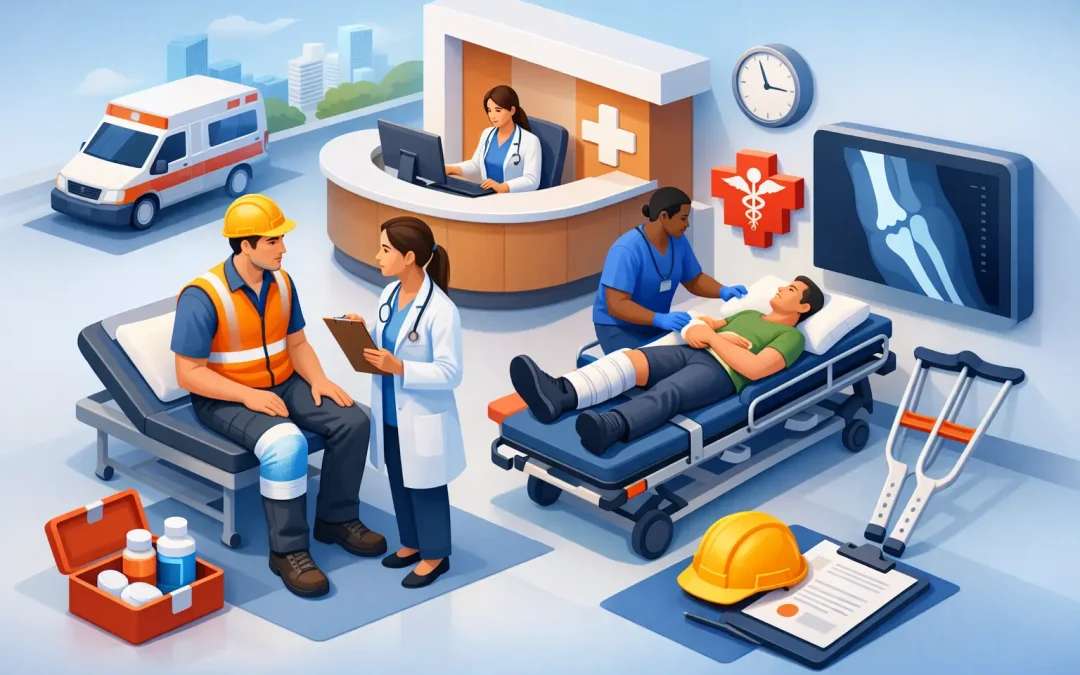
The first priority is the employee’s health. A provider will examine the injury, review how it happened, assess symptoms, and decide what treatment is needed that day. Depending on the situation, that may include wound care, splinting, pain management, activity restrictions, or guidance on next steps.
Documentation is also a central part of the visit. In workers’ compensation cases, medical records need to clearly reflect the reported injury, the mechanism of injury, the diagnosis, and the treatment plan. Employers and claims administrators often rely on these records to move a claim forward. Clear documentation also helps employees avoid confusion later if follow-up care is needed.
In many urgent care settings, on-site diagnostics can make the process much faster. X-rays may help identify fractures or rule them out. Basic lab services may support evaluation when clinically appropriate. Having these services available in one location saves time and reduces the need to send an injured worker elsewhere for the next step.
Why urgent care works well for employers and employees
From the employee’s perspective, speed matters. Pain, uncertainty, and missed work create stress. Being able to walk in, get evaluated, and leave with treatment instructions and work-status guidance can make a difficult situation more manageable.
For employers, workers compensation urgent care helps create a more organized response to workplace injuries. Instead of delaying treatment or sending every case to the ER, employers can direct non-emergency injuries to a setting equipped for timely care and documentation. That often leads to faster reporting, clearer communication, and fewer unnecessary disruptions.
There is also a practical benefit in keeping care efficient. The longer an injury goes unevaluated, the harder it can become to document accurately and plan appropriate restrictions. Prompt care supports better records and may reduce confusion about when the injury occurred, how severe it is, and what type of work the employee can safely perform.
Common injuries treated in workers compensation urgent care
Many workplace injuries are well within the scope of urgent care. These often include muscle strains from lifting, joint sprains, repetitive motion pain, minor burns, cuts that may need cleaning or closure, contusions, and minor eye irritation from debris exposure. Some clinics also evaluate neck pain, low back pain, and minor trauma from falls.
The key factor is whether the condition can be safely managed in an outpatient setting. A painful wrist after a fall may be appropriate for urgent care, especially if X-ray services are available. A deep crush injury with severe deformity is a different situation and may require emergency care. Good urgent care providers know where that line is and will direct patients to a higher level of care when needed.
The role of work-status reports and follow-up care
One of the most important parts of a workers’ compensation visit is determining what the employee can do safely after the injury. Some patients can return to regular duty. Others may need temporary restrictions, such as no heavy lifting, no prolonged standing, or limited use of an injured arm or hand.
These work-status decisions should be based on the medical evaluation, not guesswork. Clear restrictions protect the employee from worsening the injury and help employers make informed staffing decisions. When restrictions are realistic and documented well, they also support a smoother return-to-work process.
Follow-up care may be needed depending on the injury. A strain may improve with rest, medication, and modified activity. A laceration may require a wound check. A fracture, more complex orthopedic issue, or persistent symptoms may call for referral to a specialist. Urgent care can often serve as the first step, with follow-up tailored to the patient’s recovery and the employer’s workers’ compensation process.
Choosing a clinic for workers compensation urgent care
Not every urgent care clinic handles occupational injuries the same way. If an employer or employee is looking for workers compensation urgent care, it helps to choose a clinic that understands both the clinical and administrative side of these cases.
That means more than simply treating the injury. The clinic should be able to evaluate common workplace injuries efficiently, document findings clearly, provide work-status reports, and communicate the treatment plan in a way that supports next steps. On-site X-ray and testing can also make a meaningful difference, especially when a quick diagnosis affects return-to-work decisions.
Convenience matters too. Walk-in access, extended hours, and a local location can reduce downtime after an injury. For employers, that can mean less disruption to operations. For employees, it means faster care without the added stress of waiting days to be seen.
In Cincinnati, Medical Urgent Care provides walk-in treatment for work-related injuries along with on-site diagnostic services, helping patients get evaluated and treated in one place.
A few details that can make the visit easier
If possible, the injured employee should bring any employer-requested paperwork, claim information, and basic details about how the injury happened. The date, time, location, and circumstances of the incident are all useful. Even when paperwork is not available immediately, timely medical evaluation is still the priority.
Employees should also be ready to describe their symptoms clearly. When did the pain start? What movement makes it worse? Was there swelling, numbness, bleeding, or reduced range of motion? Small details can help the provider make a faster and more accurate assessment.
For employers, having a simple process in place before an injury happens can save time later. Employees should know where to go for non-emergency workplace injuries and when an emergency room is the better choice. That kind of preparation supports better care and fewer delays when an incident occurs.
Workers compensation urgent care is about timely, practical care
Workplace injuries are disruptive, but the first medical step does not have to be complicated. Workers compensation urgent care offers a straightforward option for non-emergency injuries that need prompt attention, proper documentation, and a clear treatment plan.
When care is accessible, medically sound, and handled with urgency, employees can focus on recovery and employers can move forward with better information. If a work-related injury needs attention today, choosing the right urgent care clinic can make the next step a lot easier.