
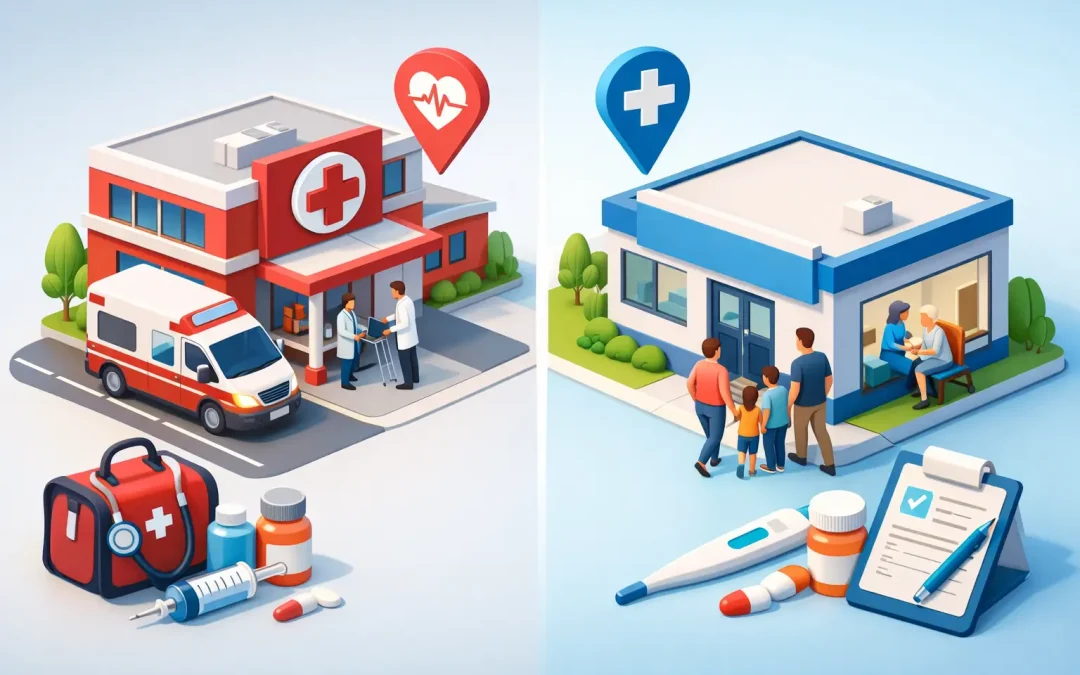
You wake up with a painful sore throat, your child twists an ankle at practice, or you realize you need a physical this week. In those moments, a common question comes up fast: what is the difference between urgent care and walk-in clinic options, and which one should you choose?
The short answer is that both offer same-day medical care without a scheduled appointment, but they are not always built to handle the same level of need. Urgent care centers generally treat a wider range of illnesses and injuries, often with on-site diagnostics like X-rays and lab testing. Walk-in clinics are usually best for simpler, routine concerns such as minor illnesses, basic preventive care, or quick evaluations.
What is the difference between urgent care and walk-in clinic care?
The biggest difference usually comes down to scope. Urgent care is designed for conditions that need prompt attention but are not life-threatening. A walk-in clinic may also see patients without appointments, but it often focuses on lower-acuity concerns and basic healthcare services.
That distinction matters when symptoms are more than minor. If you have a deeper cut, a possible fracture, chest discomfort that is not severe but still concerning, dehydration, or an illness that may require testing during the visit, urgent care is often the better fit. If you need treatment for pink eye, a simple ear infection, a school physical, or a medication refill in some settings, a walk-in clinic may be enough.
In everyday use, though, the terms can overlap. Some urgent care centers are also walk-in clinics because they accept patients without appointments. That is why the name alone does not always tell you everything. The better question is what services are available on-site and what types of conditions the clinic is equipped to manage.
Why the terms often get confused
Patients understandably use both terms to mean, “a place I can go today.” From a convenience standpoint, that makes sense. Both settings can help when your primary care doctor is booked out or when you need care after work, on a weekend, or for an issue that should not wait.
The confusion happens because “walk-in clinic” describes how you access care, while “urgent care” usually describes the medical level of care being offered. A walk-in clinic can be very limited, such as a retail clinic handling a narrow list of common conditions. An urgent care center can also be walk-in, but with broader capabilities, more advanced evaluation, and a stronger focus on urgent non-emergency needs.
For patients, the practical takeaway is simple: not every walk-in clinic is urgent care, but many urgent care centers do operate on a walk-in basis.
Services you can usually expect from urgent care
Urgent care centers are meant to bridge the gap between primary care and the emergency room. That means they are set up to treat many conditions that need same-day attention while avoiding the time and cost that often come with ER visits for non-life-threatening problems.
An urgent care center commonly treats cold and flu symptoms, fever, strep throat, ear infections, urinary tract infections, rashes, minor burns, sprains, strains, cuts that may need closure, and mild to moderate asthma symptoms. Many also provide physicals, occupational medicine, preventive services, and follow-up care for certain short-term issues.
One major advantage is diagnostic capability. On-site X-rays, blood tests, lab services, and EKG testing can make a real difference when symptoms are not straightforward. Instead of being examined in one location and sent somewhere else for testing, patients can often get answers faster in a single visit.
That broader service model is why urgent care can be the right choice for both urgent and routine outpatient needs. In Cincinnati, for example, Medical Urgent Care serves adults and children with illness care, injury treatment, diagnostics, physicals, and more under one roof.
What a walk-in clinic may be best for
A walk-in clinic can be a very convenient option when your medical issue is simple and you mainly want speed. These clinics often help with sore throats, coughs, sinus symptoms, mild skin conditions, seasonal allergies, and straightforward preventive needs such as vaccines or basic screenings, depending on the location.
The trade-off is that walk-in clinics are often narrower in scope. Some are located inside pharmacies or retail stores. They may not have imaging, expanded lab testing, or the staff and equipment needed for more involved injuries and illnesses. If your symptoms turn out to be more complicated than they first seemed, you may still need to go somewhere else for a fuller evaluation.
That does not make walk-in clinics less valuable. It just means they are often best for quick, limited concerns rather than broader urgent medical assessment.
How to choose between urgent care and a walk-in clinic
The best choice depends on three things: how serious the problem seems, whether you may need testing, and how quickly you need an answer.
If you are dealing with an injury, worsening symptoms, significant pain, breathing issues that are not severe enough for 911 but still need prompt attention, or a condition that may require imaging or lab work, urgent care is usually the safer choice. It is also a good option when you want one visit to cover evaluation, testing, and treatment planning.
If your issue is mild, familiar, and unlikely to need more than a basic exam and simple treatment, a walk-in clinic may be appropriate. Think of concerns that are uncomfortable but uncomplicated.
It also helps to think about who needs care. Parents often choose urgent care for children because symptoms can change quickly and it is reassuring to have access to diagnostics if needed. Working adults may prefer urgent care for job-related injuries, physicals, or symptoms that need same-day documentation and treatment.
When urgent care is not enough
Urgent care is not an emergency room. If someone has severe chest pain, signs of stroke, major head trauma, severe trouble breathing, uncontrolled bleeding, seizures, or sudden confusion, emergency care is the right next step.
That line matters. Choosing urgent care for a non-emergency can save time and money. Choosing the ER for a true emergency can save a life. The challenge is that some symptoms live in the middle, and that is where a capable urgent care center can be especially helpful.
Cost, convenience, and access
For many patients, this decision is not only about medicine. It is also about access. Can you be seen today? Will you need a referral? Can your child be treated after school? Will the visit turn into multiple stops for testing?
Urgent care often offers strong value because it combines convenience with a broader clinical setup. Compared with an ER visit for a non-life-threatening problem, costs are generally lower. Compared with waiting days for primary care, access is much faster. And compared with more limited walk-in settings, urgent care may reduce the chance that you will need a second visit elsewhere.
Walk-in clinics can also be cost-effective for very simple needs, especially if you know the issue is minor. But if there is a reasonable chance you will need imaging, a procedure, or expanded testing, going straight to urgent care may save time and frustration.
What to look for before you go
Rather than focusing only on the sign outside, check what the clinic actually provides. Look for whether it treats both adults and children, whether it offers on-site X-rays or lab testing, whether providers are experienced in urgent conditions, and whether hours fit your schedule.
It is also worth considering how the clinic approaches care. For most patients, speed matters, but so do professionalism, clear communication, and a courteous experience. When you are sick or worried about a family member, efficient care should still feel personal.
The right clinic should make the next step easier, not more confusing. If you are not sure whether your condition fits urgent care or a walk-in setting, start by asking what services are available and whether your symptoms can be fully evaluated there.
The best choice is usually the one that can treat the problem completely, without delay and without sending you across town for the rest of the answer. When care is prompt, capable, and local, patients can focus less on logistics and more on feeling better.